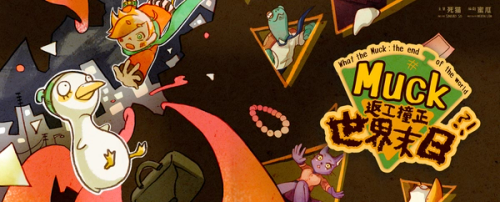
"What the Muck: The End of the World", hereafter “What the Muck”, explores these existential questions through the surreal journey of “Muck” and “Le Petit Duc” as they plot to destroy the planet "Garth." As a Hong Konger living in Japan, I found myself deeply relating to their struggles—running away from one set of problems only to face new ones, realizing that the key to happiness isn’t about location or circumstance, but how we interpret and respond to life.
This manga is a heartfelt, thought-provoking piece that visualizes countless "what if" scenarios, teaching readers to navigate life’s chaos with resilience. Before assisting creators Sineko So and Meron Lam in publishing the English version on NIUHI, I read the original in Traditional Chinese, and its emotional depth stayed with me long after the last page.
Behind the Scenes – The Challenges of Bringing "What the Muck" to English Readers
While I wasn’t the translator, I had the privilege of working with Sineko and Meron to prepare the English version for NIUHI (read more on NIUHI’s Translation Tool). Through our discussions, I gained insight into the complex process of adapting this deeply personal work for a global audience. Here are some key challenges they faced:
1. Artistic Integrity: Preserving the Original Aesthetic
On NIUHI, localization isn’t just about swapping text—it’s about maintaining the manga’s visual identity. Sineko was meticulous about the final presentation, insisting on using the exact same font as the original Chinese version rather than defaulting to a generic English typeface. This ensured that the English adaptation retained the same stylistic impact, from dialogue bubbles to sound effects.

- Hello world
- list
- item
